Kanchenjunga North Base Camp Trek – 15 Days

Kanchenjunga north base camp trek is one of the wonder of nepal, perfect for those looking to spend a long time in the mountains. Unlike Kanchenjunga Circuit Trek, it’s more […]

15 Days
Hotel & Teahouse
Start from Kathmandu and End to Kathmandu
Min 1 to Max 14 Pax in a group
Flight & Local Jeep
strenuous

Highlights

  • Discover the wildlife, experience the people, culture and hospitality of the Kanchenjunga Conservation Area.
  • Challenge yourself with a tough yet mesmerizing trek
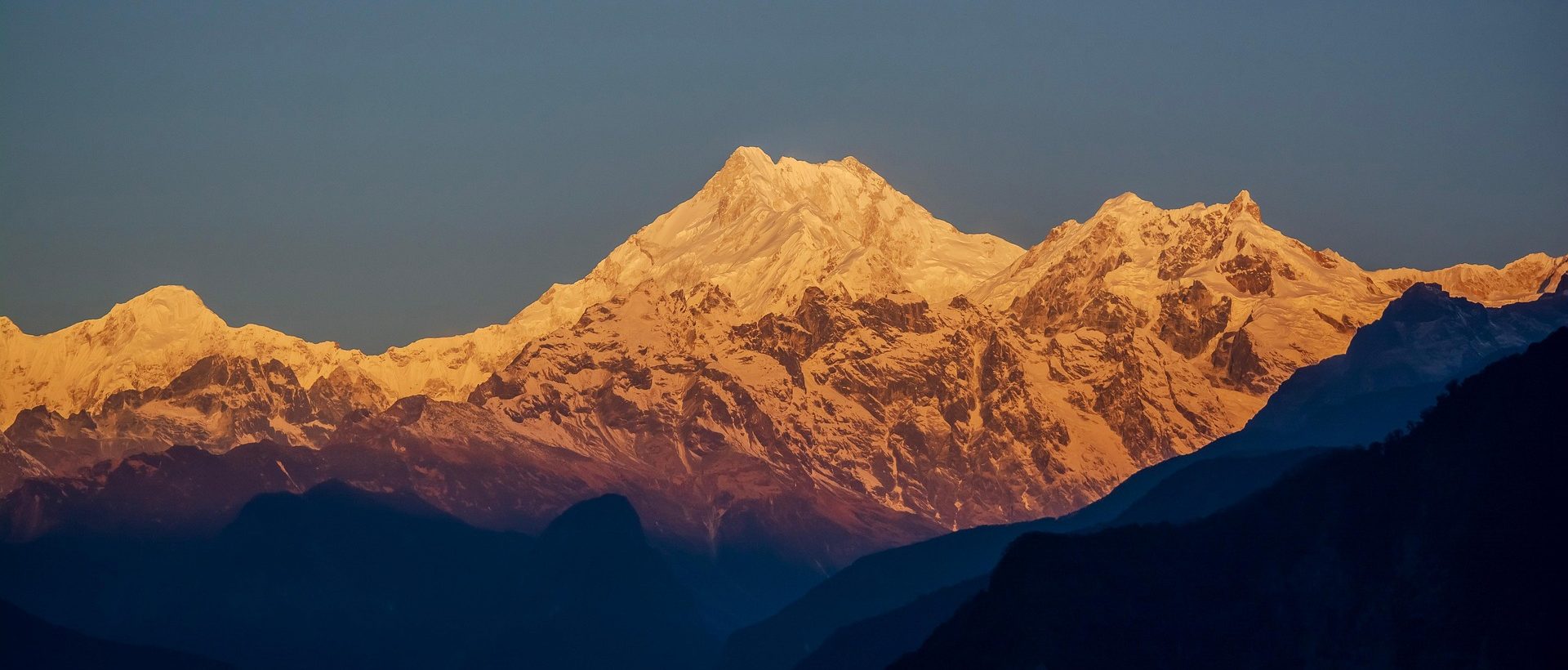
  • Reach Kanchenjunga North Base Camp and stare at the mountains which will leave you astonished.
  • Witness glaciers, rivers, waterfalls, yak pastures, and beautiful villages along the route.
  • Also get an opportunity to be at lowland Terai region of Nepal.
  • Tea gardens in Ilam, which feels unreal, with the view and organic tea in hand.

Overview

Kanchenjunga north base camp trek is one of the wonder of nepal, perfect for those looking to spend a long time in the mountains. Unlike Kanchenjunga Circuit Trek, it’s more affordable. If you are looking for the best budget-friendly off-the-beaten or remote trek in Nepal, then Kanchenjunga north base camp trek is the ideal one for you!  You will be able to explore the far eastern part of the Nepal, with the views of jaw-dropping mountain panorama during the trek.

Kanchenjunga region is a restricted area which is the worlds third highest mountain in the world, Mt. Kanchenjunga. It is also home to some of the most exclusive wildlife, flora and fauna being preserved in Kanchenjunga Conservation Area. The trekking route has different climatic zones and ascends through sub-tropical lowlands to lush rhododendron forests that further go to alpine forests and open up to glaciers. Similary with a warm hospitality of various ethinc groups of people living there and their culture and food!

The Kanchenjunga base camp trek ascends to Pangpema (5,100 m), following the Kanchenjunga Glacier. The remote and isolation of this region from other famous trails around the Himalayas wherethe essence of true wilderness is preserved. 

Best Season:

Planning to trek to Kanchenjunga North Base Camp? That’s awesome! It’s a beautiful and peaceful place, away from crowds, and you’ll walk through forests, hills, and snowy mountains. But mountain weather can change a lot, so we will help you choose the best time to go:

Spring, from March to May:

The favorite time of trekkers for this trek. The weather is usually perfect. It is not too hot, not too cold and the rhododendron flowers are blooming all along the trail. The flowers are very special because they are Nepal’s national flower! It might still be a bit chilly at the top, and sometimes there’s a little snow, but the views are amazing and the forests look magical.

 Autumn, from September to November:

It is also a great time. After the summer rains, everything looks clean and fresh. The sky is clear, perfect for seeing the big mountains! But October is also festival season in Nepal, so lots of people are traveling flights and buses get busy, so we’ll help you book early to make things easy.

Monsoon, from June to early September:

It is not the best time unless you really have no other option. It rains a lot, so trails get slippery, rivers rise, and flights can be delayed. But if this is your only time to come, talk to us—we’ll help you decide if it’s still possible.

Winter, from December to February:

It is very cold in the high mountains, and sometimes it snows! But since this trek doesn’t have big mountain passes, the trails are usually open. The only thing to remember is that some teahouses may be closed because not many people go in winter but don’t worry, we will make sure you’re taken care of.

Mountain Views During The Trek

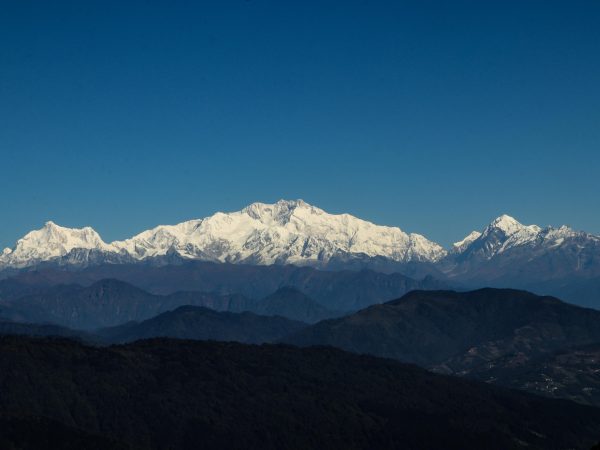
Kanchenjunga north base camp trek will provide you an opportunity to witness the best mountain views of Mt. Kanchenjunga (8,586 m/28,169 ft), Janu Himal (7,710 m/25,300 ft), Everest (8,849 m/29,032 ft), Makalu (8,463 m/26,247 ft), Tharpu Chuli (5,695 m/18,684 ft), Kabru (7,412 m/24,318 ft), etc. Likewise, along the way during the trek, you get to see the wonderful landscapes. There are pastures and rivers with yaks grazing on them, by snow-capped mountains. In the lower part of the trail, you will mostly witness the scenery of dense forest hills and rivers with some glimpse of mountains. 

Flora & Fauna

The Kanchenjunga South Base Camp region has rich and diverse flora because of its wide range of altitudes. In lower subtropical areas, you’ll find sal trees, bamboo, banana plants, and cardamom. As you accend higher, temperate forests feature rhododendrons(20 varieties), oaks, and maples, especially vibrant in spring. Near Tseram and Ramche, subalpine forests can be found such as fir, birch, and juniper. Finally, at the high-altitude base camp, alpine meadows bloom with hardy herbs, edelweiss, and rare flowers like the blue poppy. This entire region is part of the Kanchenjunga Conservation Area, home to many rare medicinal plants.

While you’ll be trekking in the Kanchenjunga Conservation Area, so there’s a high chance of you coming across exotic animals like Asian black bears, snow leopards, red pandas, etc. Similarly, if you love birds, then Kanchenjunga base camp trekking offers a great opportunity for you to see different species of birds, including snow cock, blood pheasant, golden-breasted fulvetta, etc. These flora and fauna also makes this trek more special.

Preparation for Kanchenjunga North Base Camp Trek

A Proper preparation is essential for the successful completion of the Kanchenjunga North Base Camp Trek. Here are some key steps to prepare for the trek:

  • Physical training: 
    Ensure that you are physically fit for the trek, it is recommended to engage in regular exercise, including hiking and cardio, in the months closer to the trek.
  • Altitude acclimatization: 
    The Kanchenjunga North Base Camp Trek takes you to high-altitude passes and the base camp, so it is important to acclimate to the altitude before the trek. You can do this by gradually increasing your altitude through trekking and hiking, or by visiting high-altitude locations.
  • Pack appropriately: 
    Make sure to pack appropriately for the trek, including warm clothing, a good pair of hiking boots, a sleeping bag, and other necessary equipment.
  • Get travel and medical insurance: 
    Travel and medical insurance are essential for the trek, as the Kanchenjunga region is remote and access to medical facilities can be limited.
  • Learn about the local culture and customs: 
    Before embarking on the trek, take the time to learn about the local culture and customs, including language and customs, to ensure that you are respectful and mindful of the local communities.
  • Mentally prepare yourself: 
    The Kanchenjunga North Base Camp Trek can be physically and mentally challenging, so it is important to mentally prepare yourself for the experience. Set realistic expectations and focus on the journey, rather than just the destination.

Proper preparation is essential for the successful completion of the Kanchenjunga North Base Camp Trek. Take the time to prepare physically, mentally, and logistically, to ensure that you have a safe and enjoyable experience

A genuinely remarkable adventure into the isolated Himalayan wilderness is the Kanchenjunga North Base Camp Trek. It tests your physical limits and rewards you with breathtaking mountain vistas, a thriving cultural scene, and tranquil seclusion. Long after the trek is over, you will still be moved and humbled by the experience of standing in front of the majestic Kanchenjunga peak. For any serious hiker, this adventure offers the ideal balance of spiritual connection and natural beauty.

Itinerary

If you want tailor-made trip or want to personalize this itinerary, just feel free to contact us. We are always there to help you to make your holiday plan. Contact us

Day 1

Arrival

Altitude 1350
Day 2

Kathmandu to Bhadrapur by Flight and Drive to Phidim

Duration 4-5 Hours
Altitude 1500M
Accommodation Teahouse
Meals BLD
The journey starts with a scenic flight from Kathmandu to Bhadrapur that renders hypnotizing aerial views of the Himalayas. Upon arrival, public transport will pick you up and take you to the eastern hills of Nepal. The route is very pleasant, passing through lush tea gardens and subtropical forests, while you can also catch glimpses of rural life in eastern Nepal. You will pass through places like Fikkal and Kanyam, renowned for their beautiful tea plantations, making this an even greater opportunity for tea tasting and photography. From here, after about 4–5 hours of driving, you arrive at the charming hill town of Phidim, which serves as a gateway for the Kanchenjunga area.
Day 3

Drive from Phidim to Sekathum

Altitude 1600M
Accommodation Teahouse
Meals BLD
Today is long on driving as well and takes you further into the mountains. A rough and adventurous road, with sharp turns along narrow mountain passes bordered by steep cliffs and isolated villages, awaits. You will descend a little, gaining on the higher foothills of the Himalayas. The drive is spectacular, with roaring waterfalls, thick forests, and distant hill settlements flanking the road. Eventually, you reach Sekathum.
Day 4

Sekathum to Amjilosa

Altitude 2510
Accommodation Teahouse
Meals BLD
The real trekking adventure gets under way today when you leave Sekathum and follow the trail along the Ghunsa Khola. This required crossing suspension bridges, river crossings, steep climbs, and narrow and slippery paths through dense forests. The terrain is rugged, with a lot of ups and downs, putting one's stamina to an early test. After about 6 hours of trekking through rhododendron forests and isolated ridges, you finally reach Amjilosa, a small-Tibetan-influenced village perched on a ridge. The panoramic vistas of the surrounding hills are rewarding, and you really begin to experience that sense of wilderness as you enter the Kanchenjunga Conservation Area.
Day 5

Amjilosa to Gyabla

Altitude 2730
Accommodation Teahouse
Meals BLD
The trek today is a little shorter, but it has plenty going for it. From here the trail climbs steadily amidst mossy forests containing pines, bamboos, and rhododendrons. Along the way, there is a possibility that you will see the wonders of the Himalayan wildlife such as the red panda, langurs, and other exotic birds. Nature is silent and serene, the perfect companion as you hike along waterfalls and quiet streams. Around four hours later, you arrive at Gyabla, a quiet village tucked in a forested valley
Day 6

Gyabla to Ghunsa

Altitude 3595
Accommodation Teahouse
Meals BLD
Leaving from Gyabla, the trail gradually ascends toward the picturesque village of Ghunsa. You get to cut through dense forests that slowly open to glacial rivers and splendid yak pastures. Ghunsa stands as one of the major and most significant villages in the North route; Tibetan Buddhist culture converses in the fluttering prayer flags, in the stone houses, and in the little monastery. At an altitude of 3,595 meters, it is an ideal resting spot to acclimatize and prepare for the altitudinal gain ahead. You will find quite a few trekkers here, as Ghunsa is the main hub for several trekking routes in the Kanchenjunga region
Day 7

Ghunsa to Kambachen

Altitude 4100
Accommodation Teahouse
Meals BLD
Starting from today, the trail proceeds going upstream following the river and entering a more alpine zone. The tree line is no longer visible but it gives way to smaller shrubby vegetation and rocky terrain. This route has majestic views of towering high Himalayan peaks including Jannu or Kumbhakarna, towering over the valley. You cross landslide-prone areas, past yak pastures, and glacial moraines before reaching Kambachen, high-altitude settlements nestled spectacularly against towering mountain backdrops. The air grows thinner; the starters begin feeling the effect.
Day 8

Acclimatization Day at Kambachen

Altitude 4100
Accommodation Teahouse
Meals BLD
This rest day is important for further acclimatization before you ascend to even higher altitudes. You may take some short hikes from Kambachen to the nearby ridges or do some acclimatizing walks around, with views of Kanchenjunga and the surrounding glaciers. Relax and soak in the tranquility of the wilderness, perhaps indulging in some journaling along the way. This day helps in acclimatizing the body to the altitude in preparation for the most difficult stretch of the trek.
Day 9

Kambachen-Lhonak

Altitude 4785
Accommodation Teahouse
Meals BLD
Upon exiting Kambachen, the trail grows steeper and barren. All in all, the scenery is made by glacial debris and steep hillsides. Cross icy streams and moraines while following the oscillations of the Kanchenjunga Glacier. The views are extraordinary, with towering peaks opening up in front of you onto glacial plains. After 4 hours of slow and careful trekking, you arrive in Lhonak, the remote settlement with minimal infrastructure. Situated on a flat plain near the glacier, Lhonak boasts panoramic views of Chang Himal, Kirat Chuli, and other peaks.
Day 10

Lhonak and Day Trip to Kanchenjunga North Base Camp (Pangpema – 8 hrs round trip)

Altitude 5143
Accommodation Teahouse
Meals BLD
This is the highlight of your trek. Up early, you head toward Pangpema, the Kanchenjunga North Base Camp. Insofar as the trail is demanding, so is its beauty, as it traverses alpine territory up and down icy trails and moraine fields. At Pangpema (approx. 5,143 m), a barren stretch of land opens up in front of you and one of the most humbling sights in the Himalayas—Mount Kanchenjunga soaring 8,586 meters tall, the third highest mountain in the world—fills your view. After soaking the views in, clicking pictures, and taking some rest, you head back to Lhonak on the very same day. A full round trip takes about eight hours
Day 11

Lhonak to Ghunsa

Duration 7 Hours
Altitude 3595
Accommodation Teahouse
Meals BLD
Today marks the day for the long descent to the greener and relatively oxygen-rich valley called Ghunsa. The downhill path traces back your footsteps through Kambachen and alongside the river. It's a long walk but heading downward at a steady pace will keep you energized as the air thins along the way. On reaching Ghunsa, you merely relax while absorbing familiar comforts—that should also perhaps include a hot meal and some warmth by a bonfire.
Day 12

Amjilosa to Ghunsa

Duration 7 Hours
Altitude 2510
Accommodation Teahouse
Meals BLD
The descent back through pine and rhododendron forests, past the same suspension bridges and peaceful valleys you traversed earlier, makes the trail feel more familiar. After seven hours of walking, you will eventually pass Gyabla once more and arrive at Amjilosa. Despite being downhill, the trail is still uneven and should be used with caution, particularly when descending steeply.
Day 13

Drive to Phidim from Amjilosa to Sekathum

Altitude 1600
Accommodation Teahouse
Meals BLD
Your walking portion of the trek officially ends after a brief walk back to Sekathum along riverbank trails and through forests. You take a jeep from Sekathum and make the lengthy journey back to Phidim, which winds through twisting mountain roads with constantly shifting scenery. After finishing one, you'll feel like you accomplished something.
Day 14

Flight to Kathmandu from Phidim to Bhadrapur

Altitude 1350
Accommodation Hotel
Meals BL
It was a bittersweet drive back to Bhadrapur. A final glimpse of the hills and a final tea stop in Kanyam. After that, the city noise suddenly returned as we boarded the flight to Kathmandu. However, something had changed. Kanchenjunga was in front of us. We had witnessed the world's edge.
Day 16

Final Departure

Altitude 1350
Meals Breakfast

Inclusions

What's included

Add-ons

What's not included

Group Departures